

Chaldean Storyteller Weam Namou Talks About her Film, 'Pomegranate' - Interview
Chaldean author and filmmaker Weam Namou talks about the film adaptation of her book, "Pomegrante" now available on DVD and VOD from Freestyle Digital Media.

What happens when people who escaped the same country find themselves divided once again, this time in the neighborhoods of America?
Chaldean-American filmmaker, novelist and storyteller Weam Namou tackles that question in “Pomegranate”, her award-winning feature film adapted from her own novel. Born in Iraq and now based in Michigan, Namou examines the complicated realities facing indigenous Iraqis who fled persecution only to build new lives alongside people who share the ethnicity of those they once viewed as oppressors. At the same time, they often confront racial and religious prejudice both within their own immigrant communities and from outsiders who fail to recognize the distinctions between Iraq’s diverse peoples.
Set in suburban Detroit in the months leading up to the 2016 presidential election, “Pomegranate” centers on Niran, a young Muslim immigrant adjusting to life in America after moving into a predominantly Chaldean Christian neighborhood. As political divisions deepen, everyday encounters become increasingly shaped by fear, misunderstanding and conflicting ideas about identity, faith and belonging.
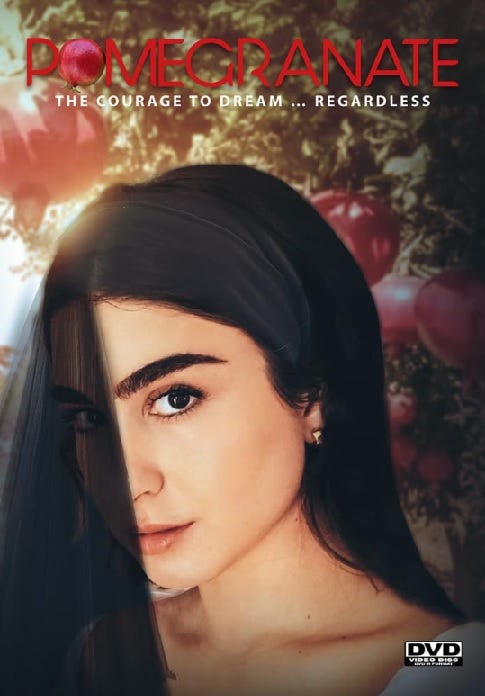
Executive produced by “Home Alone” producer Scott Rosenfelt, “Pomegranate” is widely recognized as the first narrative feature film written, directed and led by an Iraqi-American creative team. While rooted in the experiences of Iraqi immigrants, the story explores universal themes including cultural identity, generational conflict, political polarization and the challenge of preserving relationships amid deep social divisions.
Rather than approaching these issues through ideology, Namou blends drama and comedy to create a story that invites empathy, humor and honest conversation. She has said the project grew from witnessing the growing political divide surrounding the 2016 election and wanting to tell a story that humanized communities she knows intimately instead of contributing to the increasingly polarized rhetoric.
The film’s title carries its own symbolism. Namou views the pomegranate as a reflection of many distinct individuals existing within a single whole, while also pointing to the fruit’s ancient Semitic linguistic roots shared across Hebrew, Aramaic and Arabic. For her, the image serves as a reminder that beneath political and religious identities, people often have far more in common than they realize.
The project first attracted attention as a quarterfinalist in Francis Ford Coppola’s American Zoetrope competition before earning more than 50 international film awards.
Ahead of our conversation, Namou discusses adapting her novel for the screen, exploring the complexities of Chaldean and Muslim relationships and why stories rooted in humanity remain one of the most powerful ways to bridge cultural and political divides.
“Pomegranate” is available now on DVD and VOD from Freestyle Digital Media.
Visit Weam Namou’s official website to learn more about her, her books and films, visit: https://weamnamou.com/.
Follow Weam Namou on Instagram @weamnamou.
To purchase “Pomegranate” on DVD visit: www.amazon.com.
To find out where you can purchase a VOD comply of “Pomegranate” visit: https://www.freestyledigitalmedia.tv/film/pomegranate//.